
Three Months, One Familiar API, and a New Market: Aplitop's Journey Bringing tcpMDT to progeCAD
How a 20-year-old geospatial software company added another CAD platform to its lineup using the IcARX API, what the migration actually looked like, and what they wish had been easier.
This is part of a series sharing how development companies are using IcARX to bring their products to IntelliCAD-based CAD platforms. IcARX is the IntelliCAD Technology Consortium's ObjectARX®-compatible C++ API. For developers with existing ObjectARX projects, it offers a familiar API surface and a practical path to a new host CAD without a rewrite.
The Story
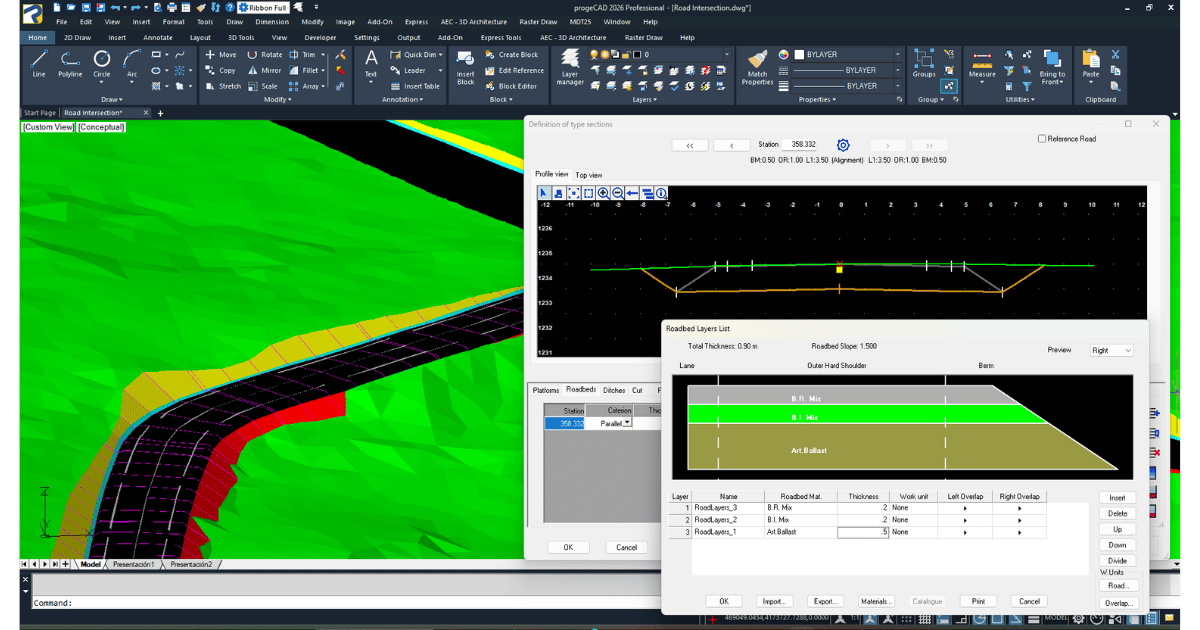
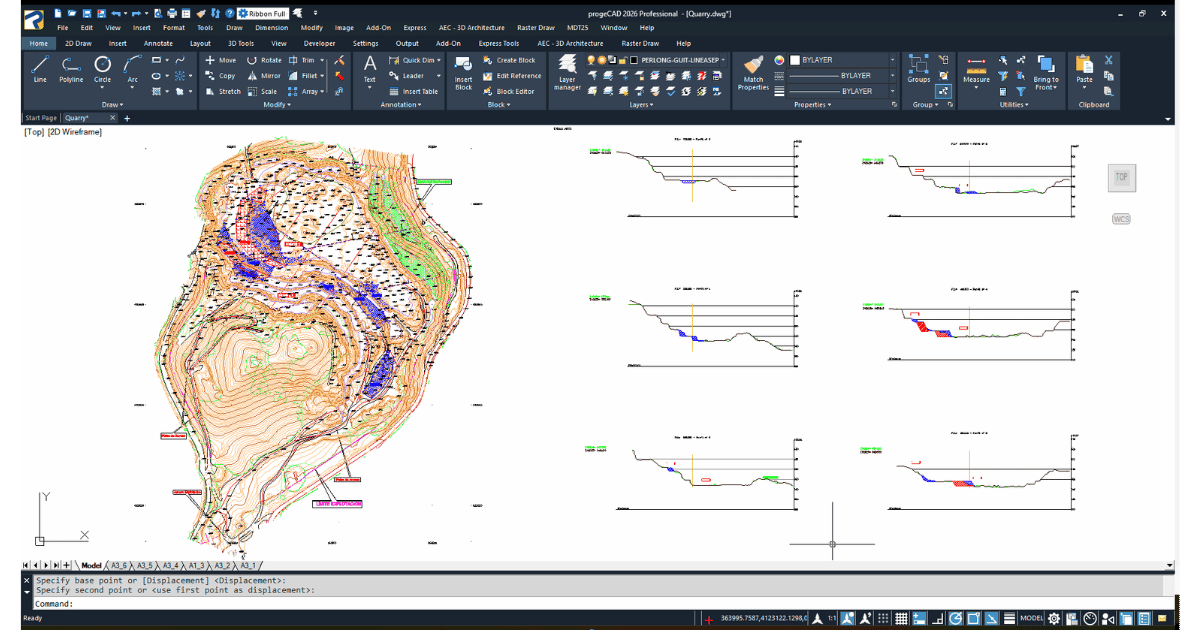
For more than two decades, Aplitop has built software for surveyors, civil engineers, and construction professionals. Their flagship CAD-based product, tcpMDT®, is in daily use in over 80 countries and runs on a handful of major CAD platforms. In late 2024 and through 2025, Aplitop added one more: progeCAD, the IntelliCAD-based CAD platform from progeSOFT.
This is the story of that port, told mostly in the words of Aplitop's CEO, Francisco Navarrete Mandly, with our perspective from the IntelliCAD Technology Consortium added where it helps frame the picture.
Why progeCAD, Why Now
The decision started with users.
"One of the main reasons was that we had already received requests from users who were working with this CAD platform and wanted to use our topographic and civil engineering tools in the same environment. We always pay close attention to that kind of demand, because it reflects real workflow needs in the market."
That demand signal lined up with a set of practical platform criteria Aplitop already cared about: native DWG™ compatibility, perpetual licensing, and strong 2D and 3D capabilities. For a company whose tools span BIM, point clouds, GIS, surveying and civil workflows, progeCAD offered a CAD foundation that made the integration effort realistic and the resulting product commercially viable.
Francisco put it plainly: progeCAD checked the boxes that matter to a company shipping a large professional surveying and civil engineering toolkit, both technically and commercially.
For Aplitop, this was not a forced platform play. They get requests for other CAD environments regularly and turn many of them down, usually because the platform is targeted at a different industry or because the adaptation effort outweighs the addressable market. progeCAD was different on both fronts.
The First Attempt: progeCAD 2025
Aplitop began the work against progeCAD 2025. The team already had a strong foundation, since tcpMDT runs on multiple ObjectARX®-compatible platforms. So in principle, this was familiar territory.
In practice, the 2025 release was not yet a complete fit. Some of the IcARX surface area Aplitop's code relied on was still being filled in.
"We started working with the 2025 version, although at that stage there were still some functions we needed for our software that were not yet available."
This is worth being honest about. IcARX is a maturing API, and large vertical applications with deep dependencies on specific ObjectARX capabilities will sometimes find the gaps before the platform team does.
The Turn: progeCAD 2026
When progeCAD 2026 landed, the picture shifted.
"With version 2026, the situation improved significantly, because it already offered almost complete ObjectARX support. From there, the code adaptation and compilation process went smoothly."
Translation: once the API surface caught up, the rest of the migration looked like the multi-platform work Aplitop had done before. Code adaptation, compilation, and an iterative testing cycle.
There were still rough edges during testing. Aplitop flagged a number of behaviors that were not yet as consistent as they expected, and progeSOFT's support team worked through them quickly. Francisco described that collaboration as professional and constructive.
This is the part of a port story that often gets glossed over. You do find issues. The question is how fast they get resolved and how much trust you build with the platform vendor while resolving them. For Aplitop, that part went well.
How Long It Actually Took
This is the question every development company asks first. Francisco's answer carries an important caveat:
"It really depends on how the original source code has been designed. If the application is modular, well structured, and already prepared to support different CAD environments, the adaptation process can be quite efficient. On the other hand, if the code is tightly coupled to a single platform, the effort can increase significantly."
For tcpMDT specifically, the work took about three months in real time, but Aplitop was running the migration in parallel with other development. Francisco's honest estimate for a focused effort on a well-structured codebase: roughly one developer-month for the adaptation, plus another month of dedicated testing.
That is a useful planning anchor for any team scoping a similar move.
What Made It Work: Standard API, Used Well
One of the most reassuring parts of the Aplitop story, especially for other development companies sizing up IcARX, is what they did not need.
"We rely mainly on the most common and standard capabilities of ObjectARX/IcARX, so we did not need highly unusual or very specific platform features in order to make the integration work."
Francisco took the point further: by sticking to the core, widely used parts of the API, the migration becomes more realistic, more maintainable, and easier to validate. You do not have to depend on exotic functionality to port a serious professional application.
For developers reading this, the takeaway is encouraging. If your codebase is structured around standard ObjectARX patterns, the path to IcARX is more straightforward than you might assume.
What the Users Thought
The reception from progeCAD users has been positive, with two distinct groups responding differently.
The first group is users who already knew tcpMDT from another CAD environment and wanted the same tools where they were now working. For them, tcpMDT on progeCAD was a continuation, not a switch. Familiar workflows, familiar data formats, easy integration.
The second group is users who were new to Aplitop entirely. The combination of a cost-effective DWG-native CAD platform with a mature, specialized surveying and civil engineering toolkit gave them something compelling at a price point they could justify.
Francisco summed up the geographic pattern bluntly: this opens markets where licensing flexibility and cost-efficiency drive decisions. Latin America was already strong for Aplitop, and the progeCAD product is helping in newer regions like India and parts of Southeast Asia, including Malaysia.
What's Next
Aplitop has tcpMDT 26 lined up for the second half of 2026. The headline additions:
- New BIM and GIS workflow capabilities.
- Expanded measurement and road stakeout commands.
- More advanced surface operations.
- A new hydrology module.
- A built-in MCP server and AI assistant for natural-language interaction with the software.
That last one is worth pausing on. Aplitop is one of the first developers building on IntelliCAD to publicly ship Model Context Protocol support inside their product. It puts them on the leading edge of the AI direction the broader CAD industry is moving toward.
What Aplitop Wishes Was Easier
A blog post that only covered wins would not be useful to anyone planning a real migration. So we asked Francisco what he would like to see from the IntelliCAD platform going forward.
His list, in his own words:
- Continued progress on demand loading, to optimize how modules load.
- Further improvement in the .NET® framework, particularly the ribbon interface.
- Better access to point cloud data.
- More mature management of geographic coordinate systems.
- A few graphic and entity-related behaviors that matter for advanced vertical applications.
Francisco closed the topic with a balanced read:
"Even so, our overall view is very positive. The progress we have seen has been clear, and we believe the platform is moving in a very promising direction for developers building advanced professional solutions."
We pass the feedback along honestly because it matters. IcARX is improving release over release, and the gaps that ship today are often the priorities that close tomorrow.
What This Means for Your Team
If you are a development company sizing up a similar move, four practical takeaways from Aplitop's experience.
The IcARX API continues to improve. progeCAD 2025 had gaps that mattered to tcpMDT. progeCAD 2026 closed most of them. Sample-test against the latest release before committing real engineering time.
Budget enough time to port your application. Aplitop's three months of elapsed time included parallel work on other things. Francisco's honest estimate for a focused effort against a well-structured codebase: roughly one developer-month for the adaptation, plus another month of dedicated testing.
Stay close to the standard, widely-used parts of the API. Aplitop did not need exotic ObjectARX features to ship a serious professional application. If your code is built around core patterns, the path to IcARX is more predictable than you might assume.
Treat the platform team as a partner, not a vendor. Testing surfaces issues. The question is how fast they get resolved and how much trust you build along the way. Aplitop's experience with progeSOFT's support team set the tone for the rest of the project.
Closing Note from ITC
If you're a development company evaluating IntelliCAD, the practical answer to "what does this look like in practice" is somewhere close to what Aplitop describes here. A standard, well-structured ObjectARX codebase migrates with predictable effort. The platform has rough edges, but the partnership chain works to close them. Aplitop raises issues with progeSOFT, who triages and works with the IntelliCAD core development team to address them in the engine. That collaboration is what turns a port into a shipping product. And the upside, in market reach and user adoption, can be meaningful.
If you'd like to dig deeper, we're hosting a developer webinar on June 16: Build on IntelliCAD: Developer Platform Options for Every CAD Application. The session walks through the development paths available on IntelliCAD, including IcARX, IRX, native Teigha .NET®, AutoLISP, and our new Integrator tier, with case studies drawn from companies building on the platform, including Aplitop. Register for the June 16 webinar here.
To learn more about the IntelliCAD platform and the IcARX API, visit intellicad.org. To learn more about Aplitop and tcpMDT, visit aplitop.com. To learn more about progeCAD and progeSOFT, visit progeSOFT.com.
tcpMDT is a registered trademark of Aplitop, S.L.
Autodesk, AutoCAD, ObjectARX, DWG, and AutoLISP are registered trademarks or trademarks of Autodesk, Inc. IntelliCAD Technology Consortium is not affiliated with or endorsed by Autodesk.
Microsoft and .NET are registered trademarks or trademarks of Microsoft Corporation.